


adabomb
-
Posts
55 -
Joined
-
Last visited
1 Follower

adabomb's Achievements



![Christmas in July [2025]](https://stakecommunity.com/uploads/monthly_2025_07/ChristmasinJuly.jpg.f8786999ad0d5c5761f6a20913292803.jpg "Christmas in July [2025]")


-
 surajsd26 reacted to a post in a topic:
👔 Happy Father's Day: Finish This Dad Sentence!
surajsd26 reacted to a post in a topic:
👔 Happy Father's Day: Finish This Dad Sentence!
-
👔 Happy Father's Day: Finish This Dad Sentence!
adabomb replied to BratislavK's topic in Past Events
"We are not buying that because Im your new dad !! ....ur real father will get it for you. Adabomb -
KaiZidan reacted to a post in a topic:
🔥 If Stake Gave You $100 Free Right Now… What Would You Do? 🔥
-
🔥 If Stake Gave You $100 Free Right Now… What Would You Do? 🔥
adabomb replied to KaiZidan's topic in Casino Discussion
If stake gave me a free 100 right now first thing ill withdraw 60 get some m8ch needed food for the fridge, freezer. And with the remaining 40 ill spend 5 dollers on every original keeping my bet low to get some play time and wager. -
 spaceoddtiddy reacted to a post in a topic:
What’s the first thing you’re buying when you hit your target?
spaceoddtiddy reacted to a post in a topic:
What’s the first thing you’re buying when you hit your target?
-
 waqas666 reacted to a post in a topic:
What’s the first thing you’re buying when you hit your target?
waqas666 reacted to a post in a topic:
What’s the first thing you’re buying when you hit your target?
-
7amaniz reacted to a post in a topic:
What’s the first thing you’re buying when you hit your target?
-
I Hit Limbo 800,000X 3 Times In Less Than A Week😜
adabomb replied to KennyB's topic in Casino Discussion
I'll never hit this multi again I Wish I Was Bitten at least something higher I can't believe I hit this multiplier on such a little bit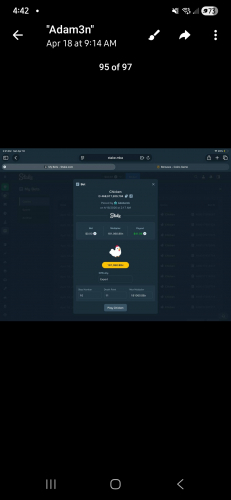
-
Ladea reacted to a post in a topic:
Survival🎲🚨: You can only play ONE Stake game for a year. What is it
-
 7amaniz reacted to a post in a topic:
Be honest: Are Forum Challenges actually worth the effort? 🤨
7amaniz reacted to a post in a topic:
Be honest: Are Forum Challenges actually worth the effort? 🤨
-
7amaniz reacted to a post in a topic:
Survival🎲🚨: You can only play ONE Stake game for a year. What is it
-
KaiZidan reacted to a post in a topic:
$56M LOSS?! Is Trainwreckstv actually losing it or its "Streamer Math"
-
KaiZidan reacted to a post in a topic:
Survival🎲🚨: You can only play ONE Stake game for a year. What is it
-
Survival🎲🚨: You can only play ONE Stake game for a year. What is it
adabomb replied to 7amaniz's topic in Casino Discussion
I already said what I had to say -
What’s the first thing you’re buying when you hit your target?
adabomb replied to 7amaniz's topic in Casino Discussion
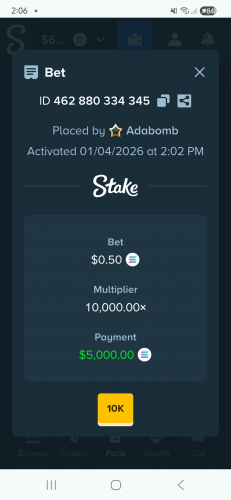
At the start of this month I finally finally hit a mega multiplier not just once but three times on Plinko once on a dollar 20 12 G's man next to the 50 cents 10K multiplier and I'll just post the pictures what you guys check it out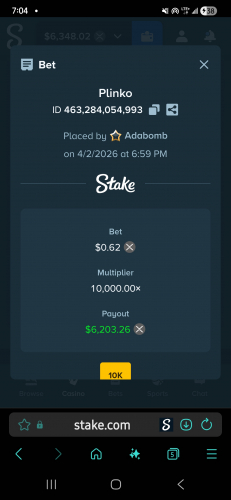
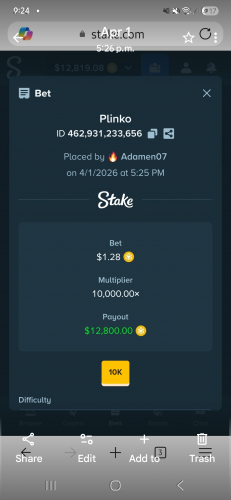
-
Be honest: Are Forum Challenges actually worth the effort? 🤨
adabomb replied to 7amaniz's topic in Casino Discussion
I haven't even made one prediction or anything on the stake form yet im such a newbie and I've been been here for one year -
Train wreck is the goat Adabomb
-
3923 Adabomb
-
This P.C is next level. ID: Adabomb
-
I’m from Harbor’s End. If you live within fifty miles of the Atlantic, you’ve probably seen towns like it—shingles bleached by salt, fishing boats tied tight in the harbor, and everyone knowing everyone’s business, whether you like it or not. The Christmas I’m talking about, ten years ago, felt like the end of the world. Not the quiet, snowglobe Christmas you see on cards. This was the year of the Tidal Surge. It hit three days before Christmas Eve. A freak Nor’easter that slammed our coast. The wind sounded like a freight train loaded with knives. The storm didn’t just knock out the power; it took out the town’s most vital artery: the Lighthouse. Now, you have to understand. That light isn't just a beacon; it is Harbor’s End. It guides every returning boat, every late-night run. If that light stays dark on Christmas Eve, it’s like the heart of the town stopped beating. My grandfather, Old Man Silas, he was the lighthouse keeper—the last one in a private residence, living right beside the tower. He was also the only person who knew how to operate the antique backup generator, the one that needed to be cranked like a stubborn Model T. The surge had flooded his basement, where the generator sat, and worse, the frantic effort had brought on a terrible sickness. He was bedridden, shivering, and refusing to let us call the Coast Guard because he kept whispering, "The light, kid. The boats are coming home for Christmas." The power company said they couldn't get a crew through the downed lines and flooded roads until after Christmas. Hope felt like a distant, impossible warmth. That’s when the 'everybody knows everybody' spirit kicked in. The call went out on old battery-powered radio, relayed by some ham radio enthusiast up in the hills. It wasn't about the generator. It was about Old Man Silas. On Christmas Eve, the town converged. Not with gifts, but with tools. Mrs. Petrova, the crankiest woman in town, who runs the diner and hasn't bought a new dress since the 70s, showed up with every blanket, every warm wool sweater she owned, stripping the shelves of her general store. Young Jimmy and Mark, the two teenage deckhands who usually spent their time sneaking cigarettes behind the cannery, appeared with ropes and pulleys, experts in hoisting heavy, awkward things—which is exactly what that generator was. And Reverend Thomas, who hadn't climbed anything steeper than the church stairs in twenty years, brought a handful of perfectly preserved kerosene lanterns from the church basement. We worked for six solid hours. In the bitter cold, slipping on seaweed-slicked granite, we hauled that heavy, waterlogged generator out of the basement, piece by rusted piece. There was no single hero; there was only a hundred hands grabbing cold metal. As the sun began to sink below the turbulent grey horizon, plunging the coast into a terrifying blackness, we finally had the generator secured on a dry patch of lawn. Jimmy poured the last precious drops of clean fuel. We cranked. And cranked. And cranked. Nothing. Just the awful, echoing silence of the Atlantic. I looked at my grandfather's darkened window, then out at the black sea where my uncle’s fishing vessel was surely steaming home. I felt the disarray rise in my throat again—we had failed. Then, Reverend Thomas handed me a lantern. "Go on," he said, his face lined with fatigue, "Let him see one light." I climbed the tower stairs, placed the lantern on the platform, and lit the wick. It was tiny, useless against the sea, but it cast a hopeful glow on the brass workings of the lens. And just as I started back down, the world shuddered. Below, with a deafening, mechanical roar, the generator caught. The great Fresnel lens didn't just light up; it exploded the darkness. The beam swept out across the churning water, a perfect, steady arc of gold. That Christmas, we didn't have turkey or carols. We had canned soup and slept bundled in old wool. But every single person in Harbor’s End saw that light cut through the storm. My uncle’s boat radioed in safe an hour later, guided home not just by the light, but by the belief that someone, everyone, would be there to switch it on. I realized then that hope isn’t a warm blanket or a miracle. Hope is the stubborn, loud refusal of a small coastal town to let its heart stop beating. It’s the sound of a rusted engine finally roaring to life, not for profit, but just to say, "We're still here, and we're waiting for you." That was the year Harbor’s End reminded itself that the most important light we share is the one we hold for each other. ID:Adabomb
-
Changing my display picture on X ( twitter) and replying to all posts of stake . Hope im get lucky to chosen. ID:Adabomb
-
Changing my display pic on X and replying to all stakes posts...simple easy hope i get chosen Adamen Changing my display pic on X and replying to all stakes posts...simple easy hope i get chosen Adamen
-
413655363221. 413655666548. 413655944819. 413656101989. 413656173064. 413656260843 413656311563. 413656511874 413656564854 413657079296 Username: Adabomb
-
413593444621 413594250618 413594458828 413654347988 413654362369 413654373940 413654381749 413654391763 413654416229 413654446599 413654483951 413654529352 413654651398 413654690967 413654723008 Stake user name: Adabomb
-
4x Adabomb


